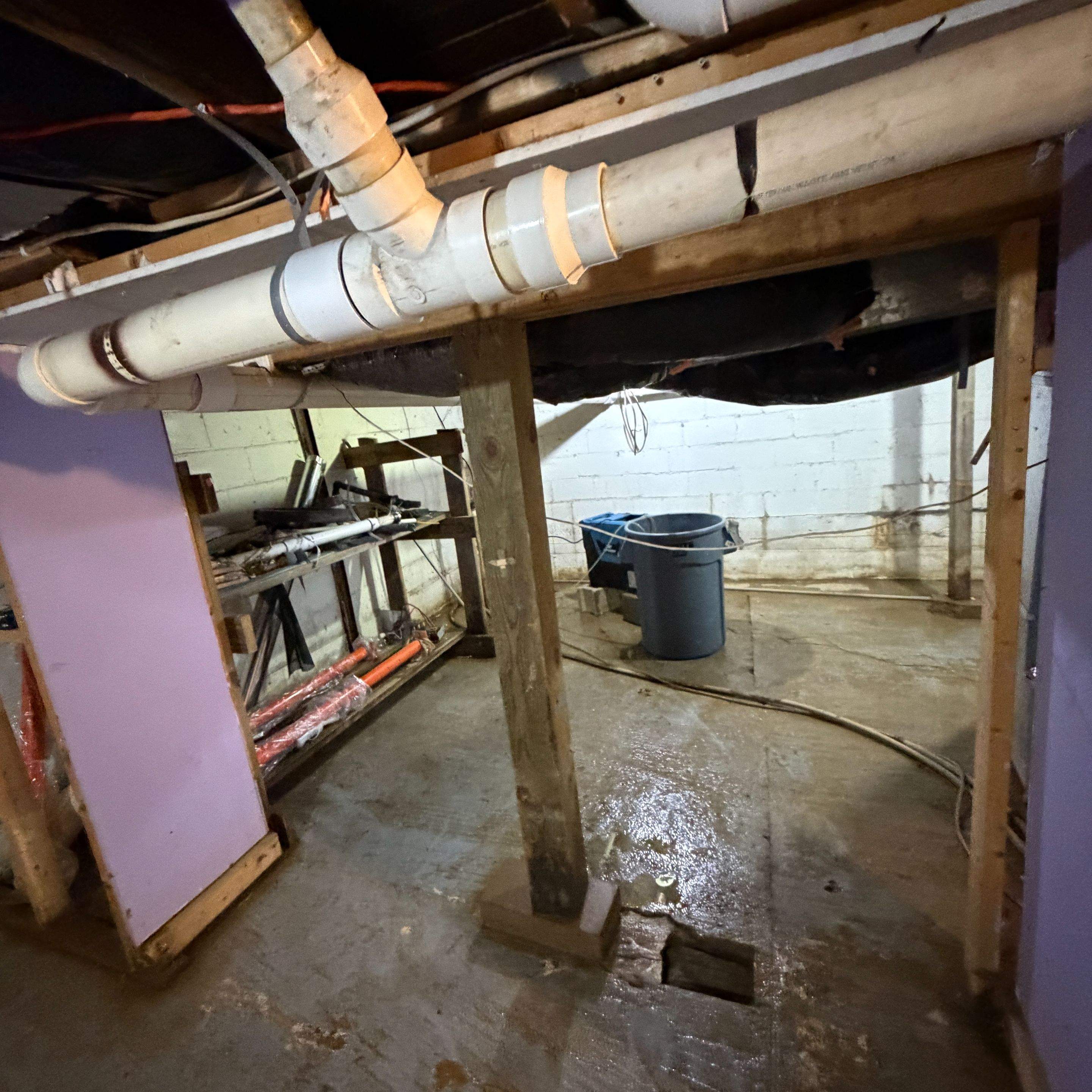
What Category 2 Water Actually Is
The IICRC S500 standard defines Category 2 water as water containing significant contamination with the potential to cause discomfort or sickness if contacted or consumed. The contaminants can be chemical, biological, or physical. Think detergent residue, urine without feces, dishwasher discharge with food particles, aquarium water, hydrostatic seepage through a foundation wall, or a sump pit discharge that has been sitting long enough to grow bacteria. Clean Category 1 water becomes Category 2 within roughly 24 to 48 hours at room temperature, faster in the humid Holliday Farms summer months when basement conditions push past 70 percent relative humidity.
This degradation timeline is the single most important fact for any homeowner reading this at 11pm with a wet floor. The water under your vinyl plank right now may have started clean from a supply line, but the clock started when it escaped the pipe. Waiting until morning is often the decision that turns a $2,800 dry-out into a $9,000 demolition and reconstruction. Our water damage restoration crews in Holliday Farms are dispatched 24/7 specifically because of how aggressive that timeline is.
It helps to understand why Category 2 water is biologically active in a way Category 1 is not. Soap residue, food particles, skin cells, and trace organics provide a nutrient bed for bacteria that are already present on every surface in your home. Add ambient warmth and moisture, and colony counts can double every 20 minutes. By the time you smell that faintly sour, earthy odor, you are typically looking at bacterial loads in the millions per square centimeter on affected porous materials. That is why our technicians treat every grey water loss as a biohazard event from the moment they walk through the door, regardless of how clear the water looks on the floor.
Category 2 Versus Category 1 and Category 3: The Decision Table
The table below is the framework we use on every Holliday Farms job. It drives equipment selection, material removal decisions, PPE requirements, and what your insurance carrier will reimburse. Read it carefully, because the differences are not academic.
| Factor | Category 1 (Clean) | Category 2 (Grey) | Category 3 (Black) |
|---|---|---|---|
| Typical Source | Supply line, ice maker line, rainwater from above | Dishwasher, washing machine, shower drain, sump discharge, aquarium | Toilet with feces, sewage backup, flood water, river overflow |
| Health Risk | Minimal on contact | Bacterial, viral, chemical exposure on contact or inhalation | Pathogens, parasites, severe illness risk |
| Time to Next Category | 24 to 48 hours becomes Category 2 | 48 to 72 hours becomes Category 3 | Already worst case |
| Drywall | Often dryable in place | Remove 12 to 24 inches above water line | Remove all affected, plus 24 inches |
| Carpet Pad | Salvageable if dried fast | Always removed and discarded | Always removed, carpet usually too |
| Subfloor (OSB) | Dry in place | Antimicrobial treat, dry, monitor | Usually removed |
| PPE Required | Standard gloves | N95, nitrile gloves, eye protection | Full Tyvek, respirator, boot covers |
| Antimicrobial | Optional | Required on all contacted surfaces | Required, sometimes multiple applications |
| Air Scrubbing | Usually not needed | HEPA scrubbers recommended | HEPA scrubbers mandatory, containment built |
| Typical Holliday Farms Cost Range | $1,200 to $3,500 | $2,500 to $7,500 | $4,500 to $16,000+ |
| Insurance Coding | Cat 1 loss, often covered | Cat 2, covered with documentation | Cat 3, requires detailed scope and often sewer rider |
What This Table Means for Your Loss Right Now
Look at the drywall row. On a Category 2 loss, we are required to remove drywall 12 to 24 inches above the visible water line because the porous gypsum core has absorbed contaminated water by capillary action well above what you can see. Homeowners who skip this step almost always call us back six to ten weeks later for mold remediation after water damage, and the second job costs more than the first one would have. The drywall is not the expensive part. The mold colonies behind it are.
The carpet pad row matters for any Holliday Farms basement loss. Pad is essentially a sponge, and contaminated pad cannot be effectively sanitized in place. We remove it, treat the slab with an EPA-registered antimicrobial, dry the carpet face separately if it is salvageable, and reinstall over new pad. The math almost always favors replacing pad rather than fighting it, and your adjuster expects to see it on the scope.
The time-to-next-category row is why we run our phones around the clock. A Category 2 loss that sits untouched for 72 hours in a warm Holliday Farms basement is no longer a Category 2 loss. It is Category 3, and the cost column on the right shifts accordingly. If you are dealing with a basement scenario specifically, our basement flooding response page covers the extraction and structural drying side in more depth.
Pay attention to the antimicrobial and air scrubbing rows together. They tell you that a proper Category 2 response is not just about removing water, it is about treating every surface the water touched and the air above it. Bacterial aerosols become airborne during extraction and demolition, which is why Holliday Farms Water Restoration technicians stage HEPA scrubbers before any cutting begins. Skipping this step contaminates HVAC returns, soft furnishings, and rooms that were never wet, turning a contained loss into a whole-home concern.
The Holliday Farms Insurance Conversation
Most standard homeowner policies in Indiana cover sudden and accidental Category 2 discharges, like a washing machine hose that bursts. They generally do not cover gradual seepage, long-term leaks, or groundwater intrusion without specific endorsements. When we document your loss, we photograph the source, moisture map the affected materials with calibrated meters, log temperature and humidity readings, and provide the Xactimate-formatted scope your adjuster needs. That documentation is the difference between a paid claim and a denied one.
One detail homeowners often miss: the moment you identify a Category 2 loss, you have a duty under your policy to mitigate further damage. That language appears in nearly every Indiana policy, and adjusters lean on it during claim review. Calling Holliday Farms Water Restoration within hours of discovery, keeping the dispatch ticket, and saving every photo timestamp creates a paper trail that satisfies the mitigation clause. If you wait two days hoping it will dry on its own, the carrier may reduce or deny the claim on the grounds that secondary damage was preventable. Speed protects both the structure and the coverage.